Are Tomatoes Self-Pollinating?
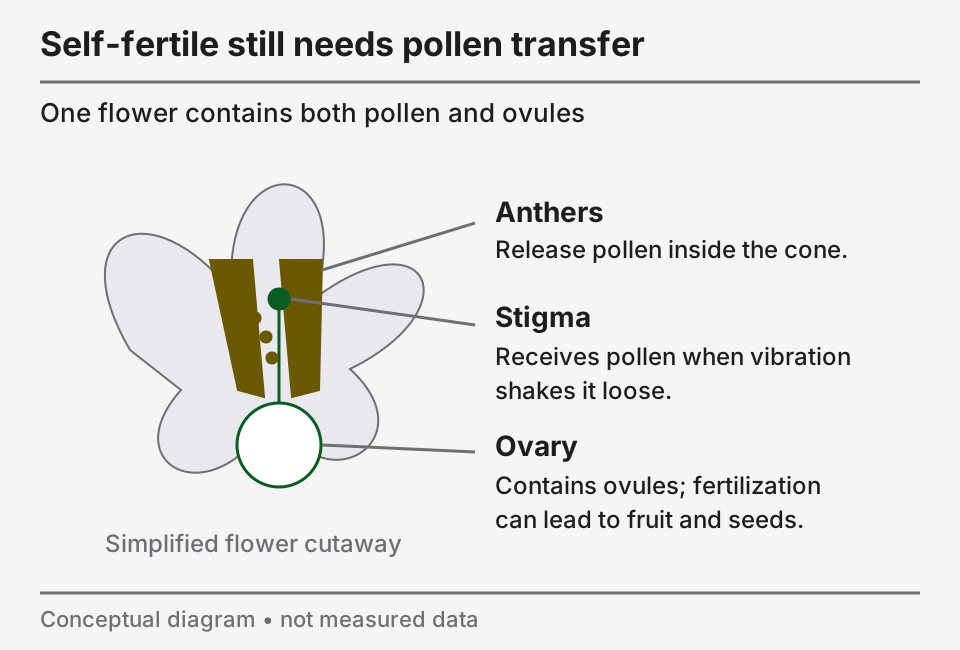
Yes. Tomatoes are self-pollinating plants. Each flower has both male parts (stamens that shed pollen) and female parts, including the stigma and ovary. After fertilization, the ovary develops into the fruit. A single plant can set fruit without another variety nearby.
Pollen still has to move a short distance from the anthers onto the stigma. A self-fertile flower may need help moving that pollen.
How do tomatoes pollinate?
- A flower opens. The anthers form a cone around the stigma.
- Ripe pollen sheds inside that cone.
- Vibration or a light knock sends pollen onto the stigma.
- Pollen tubes grow toward the ovules, allowing fertilization. The ovary can then develop into a tomato.
Tomato pollen is sticky and relatively heavy. Wind and insect visits help by shaking it loose. Bumblebees vibrate flowers through buzz pollination. Bees are not required, but indoor plants and enclosed greenhouses may lack both insect visits and a breeze.
Why fruit still fails on self-pollinating plants
Self-pollinating does not mean every blossom becomes a tomato.
- Little movement. Pollen may remain in the anthers instead of reaching the stigma.
- Heat. The University of Maryland Extension source above reports that temperatures above 90°F (32°C) harm the viability of pollen and ovules.
- Temperature during fertilization. The same source gives 70°F (21°C) as the optimum for pollen-tube growth; temperatures above or below it reduce germination and growth.
- Wet conditions. Pollen can clump and become less available for pollination.
Blossom drop alone does not tell you whether pollination or fertilization failed. Moving more pollen will not resolve every cause of poor fruit set.
When to help pollination
Help when plants are flowering and you are not seeing fruit, especially indoors, on a patio with no breeze, or under glass.
Gently tap the stake or flower cluster to shake open flowers. There is no need to transfer pollen from a second plant. Avoid prolonged or forceful vibration.
Gerald Brust's high-tunnel study tested mechanical vibration and found that its duration and frequency affected yield. Heirloom cultivars responded less consistently than hybrids. Those results come from specific high-tunnel treatments; they do not establish a universal schedule for hand-pollinating a patio plant.
Related Notes
- Gardening Tips - General gardening principles
- Raised Beds - Growing tomatoes in raised beds
- Plants Index - Other plant notes
- Gardening - Complete gardening knowledge